ORT in Poultry

INTRODUCTION


ORT (Ornithobacterium rhinotracheale) disease is a respiratory infection caused by a Gram-negative bacterium, severely affecting broilers and layers.

In intensive farming, outbreaks commonly occur under poor ventilation, high stocking density, and the presence of pathogens such as IB (Infectious Bronchitis), Newcastle, or Mycoplasma gallisepticum.


PATHOGENESIS AND RISK FACTORS


After entering through the respiratory tract, ORT bacteria adhere to the mucosa of the trachea and bronchi, causing inflammation and stimulating exudate secretion.

When combined with pre-existing lesions caused by viruses such as IB or Newcastle, the respiratory system becomes weakened, creating favorable conditions for ORT to proliferate rapidly.                                      

ORT not only increases the mortality rate but also leads to reduced weight gain, increased FCR, and extended rearing periods.


  Main risk factors

  • High NH₃ concentration (>20 ppm)
  • High stocking density
  • Poor ventilation
  • Coinfection with virus or Mycoplasma
 

CLINICAL SYMPTOMS AND LESIONS

Clinical symptoms:

  • Dyspnea, neck extension, open-mouth breathing
  • Coughing, frequent head shaking
  • Cyanotic comb due to hypoxia
  • Decreased feed intake, reduced weight gain

Environmental risk factors:

  • High NH₃ concentration (>20 ppm)
  • High stocking density
  • Poor ventilation
  • Coinfection with virus


SUMMARY OF KPIs

  • Mortality rate: 5–15%
  • Increased FCR: +5–10%
  • Extended rearing period: +5–7 days
  • Economic loss: 20–40 million VND / 10,000 birds


TREATMENT PRINCIPLES AND PROTOCOLS


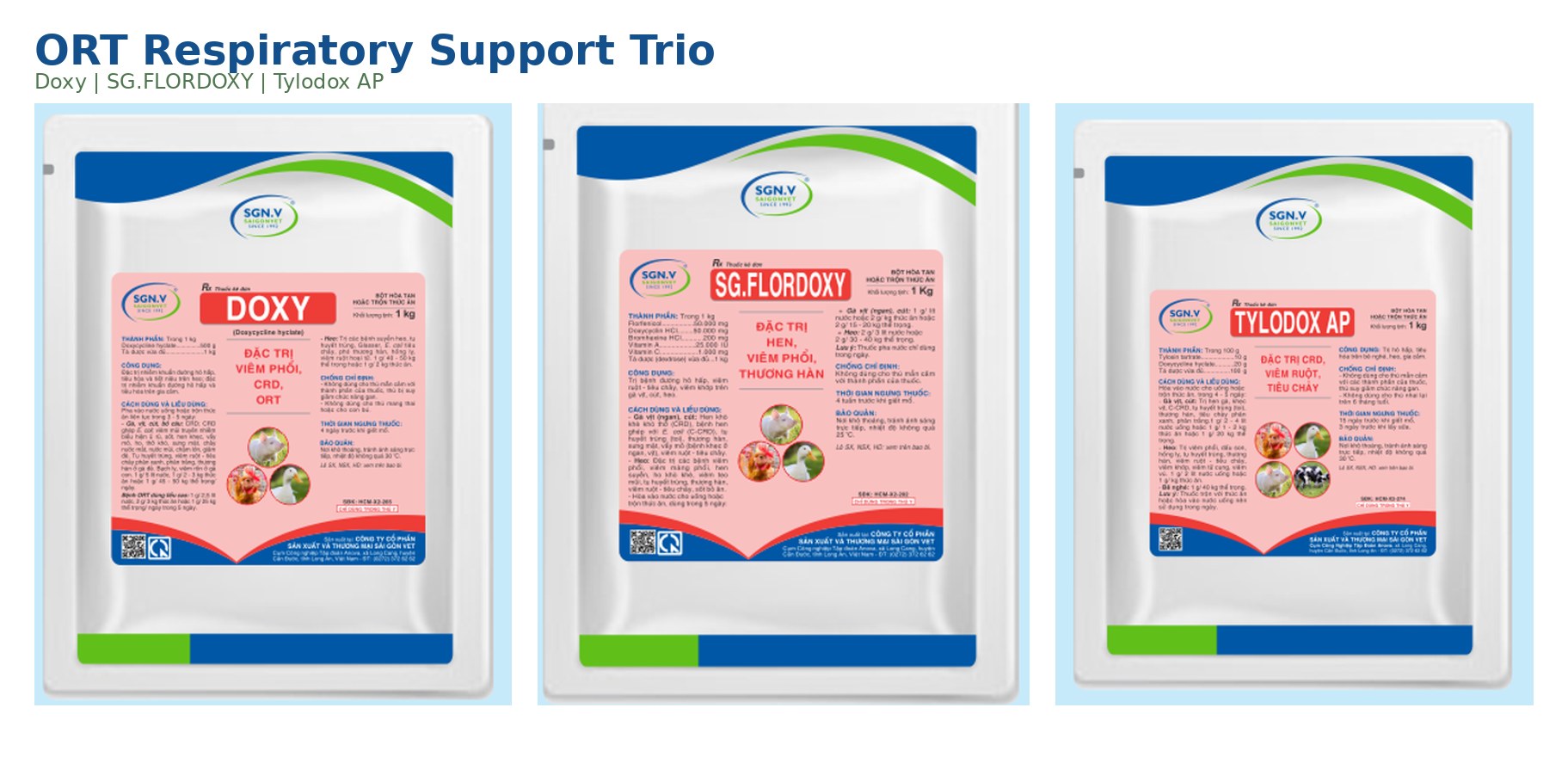
Florfenicol + Doxycycline + Bromhexine
 Antibacterial and fibrin-dissolving action, helping clear the airways quickly


DOXY (Doxycycline hyclate)

 Reference dose: 1g / 25kg body weight / day × 5 days


TYLODOX AP

 Suitable when ORT is coinfected with CRD (Mycoplasma)


TREATMENT PRINCIPLES

(1) Antibiotics – bacterial control

  • Florfenicol
  • Doxycycline
  • Combined usage to reduce drug resistance

(2) Expectorant – resolving blockage

  • Bromhexine
  • Reduces the risk of rapid suffocation


PREVENTION AND LONG-TERM CONTROL

  • Maintain NH₃ < 20 ppm
  • Ensure house ventilation
  • Reduce stocking density
  • Effectively control IB and Newcastle with vaccines
  • Manage dry, clean litter


CONCLUSION

ORT is not just a simple respiratory disease but a complex syndrome involving environment, microbiology, and immunity.

Effective treatment requires combining the right antibiotics with expectorant solutions to simultaneously address both the root cause and mechanical consequences.


Other news

Chia sẻ nhận xét về sản phẩm

Gửi nhận xét
GỬI ĐÁNH GIÁ CỦA BẠN
Đánh giá
Gửi

Video

"SPRING FOR CHILDREN" AT BINH THANH FLOATING VILLAGE
"SPRING FOR CHILDREN" AT BINH THANH FLOATING VILLAGE | DOWNLOAD
NOVA PHARMA (SAIGON VET) JOINS HANDS TO DISTRIBUTE TET GIFTS IN HONG NGU DISTRICT
NOVA PHARMA (SAIGON VET) JOINS HANDS TO DISTRIBUTE TET GIFTS IN HONG NGU DISTRICT | DOWNLOAD

Connect with our team of dedicated experts today!