Science News
Why shouldn't antibiotics be used "preventatively" on a large scale in healthy herds?
Antibiotics are a valuable treatment tool, but they should not become a "constant shield" for every risk in livestock production. Sustainable disease prevention must start with biosecurity, vaccines, nutrition, clean water, environmental management, and herd monitoring.
In livestock farming, "preventative action" is a highly understandable mindset. When the weather changes, when animals are moved to new pens, when stocking densities are high, or when there are reports of nearby outbreaks, farmers naturally want to do something to "block the risks upfront."
However, in modern livestock farming, using antibiotics as a blanket "preventative" measure for a healthy herd should not become a regular habit. The issue lies not in the concept of "prevention," but in applying it massively and without a solid clinical basis.
No Extremes
No antibiotic rejection
When livestock suffer from bacterial infections, antibiotics remain a critical treatment tool if used correctly.
No Misuse
No mass use without a basis
Healthy herds should not receive routine antibiotics solely to provide a false sense of security.
Sustainable Management
No substitute for farm management
Antibiotics cannot replace proper sanitation, disinfection, ventilation, vaccines, nutrition, and herd monitoring.
Proper Problem Identification
What is mass "preventative" use?
Mass "preventative" use is generally understood as administering antibiotics to an entire herd even when there are no clear clinical signs of disease, no identified specific risk, no veterinary diagnosis, or no technical indications.
For instance, giving antibiotics periodically "just to be safe" while livestock are still healthy, mixing antibiotics into feed every time the weather changes, or treating the entire herd because of a few weak animals without investigating the root cause.
Why do farmers easily resort to preventative antibiotics?
Fear of rapid outbreaks
Every day a disease persists increases costs, reduces productivity, and heightens the risk of severe loss.
Previous bad experiences
Losses in previous cycles prompt farmers to "block the threat early" for peace of mind.
Lack of tracking data
Without logs and early warnings, antibiotics easily become the default first choice.
The need for action
Antibiotics offer a feeling of "having taken action," though they may not address the underlying cause.
Mass preventative use can mask the actual cause of disease
One of the greatest risks is delaying the farm's ability to identify the real issue. If a herd consistently develops respiratory issues a few days after a weather transition, but antibiotics are administered immediately every single time, the farm may overlook critical factors such as ventilation, toxic gas levels, humidity, stocking density, drafts, dust, bedding quality, or herd immunity.
Similarly, if livestock frequently suffer from diarrhea and the farm routinely uses antibiotics, they might ignore critical factors like water safety, feed quality, mycotoxins, coccidia, parasites, feeder hygiene, or post-transfer stress.
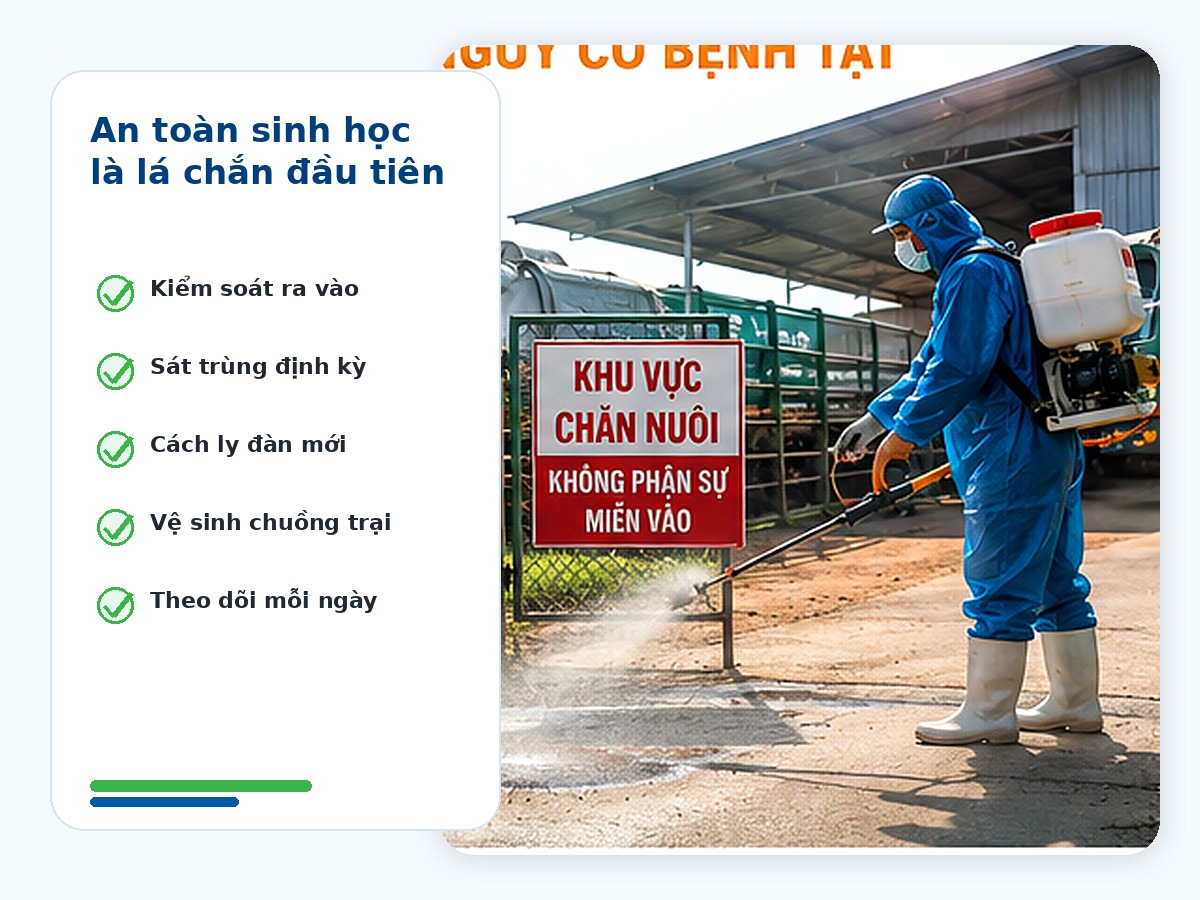
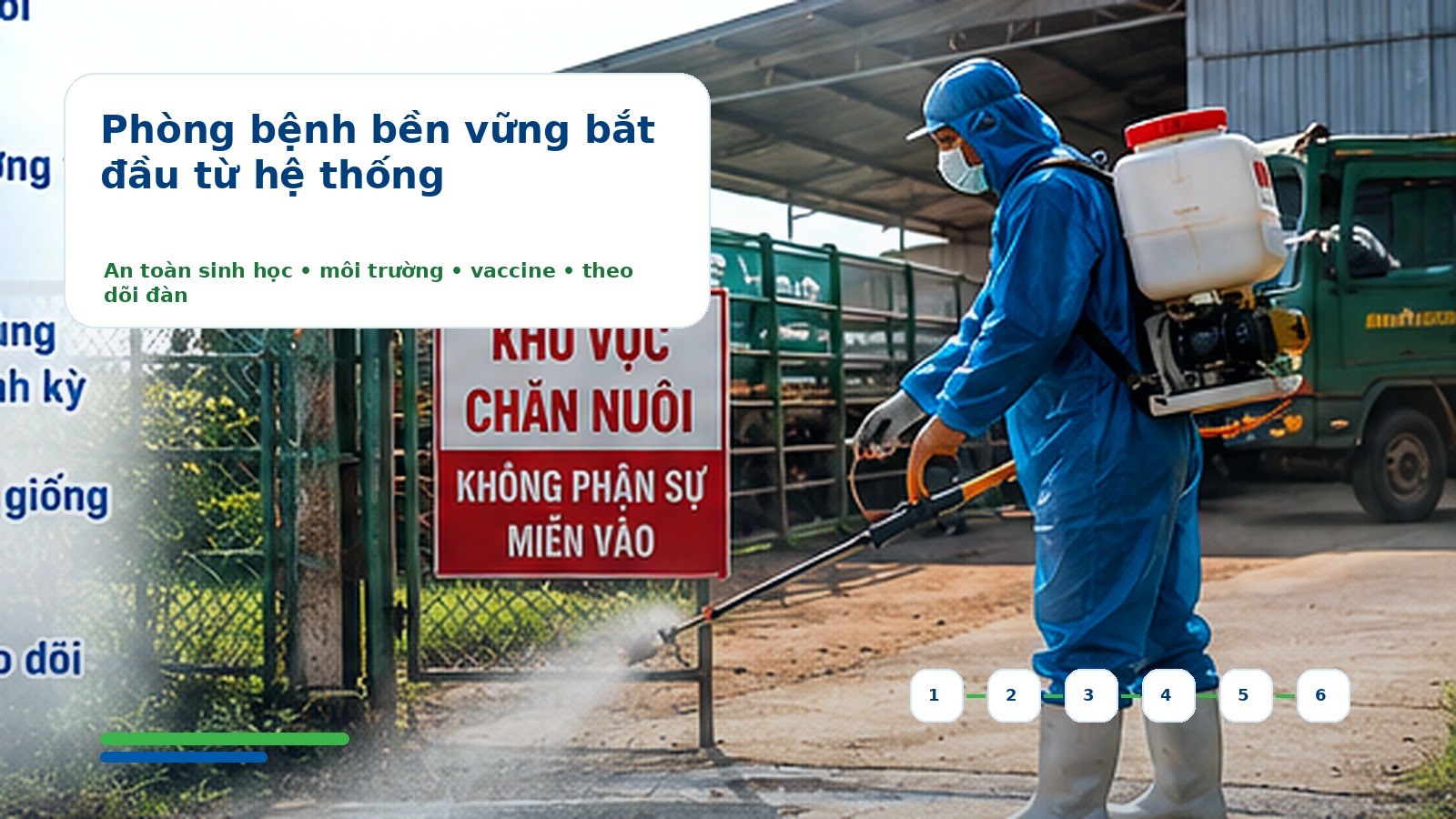
Sustainable disease prevention does not begin with using more drugs
Sustainable disease prevention begins with understanding the true causes and controlling on-farm risks: personnel entry, vehicle disinfection, equipment sanitation, genetic sources, barn hygiene, and tracking newly introduced stock.
Four risks of mass preventative antibiotic use
1
Increased costs without guaranteed efficacy
Costs include not only the price of the medication, but also labor for administration, monitoring, managing withdrawal times, and the risks of incorrect timing.
2
Delayed resolution of root causes
If the issue stems from environmental factors, stocking density, water, or nutrition, antibiotics only offer temporary, superficial relief.
3
Reduced long-term treatment efficacy
Using antibiotics too frequently, unnecessarily, or incorrectly can make future treatments much more difficult and less effective.
4
Uncontrolled withdrawal periods
Using multiple drug classes repeatedly without careful documentation increases the risk of residue issues during marketing or harvesting.
Avoiding mass preventative use does not mean abandoning the herd
Shifting from "drug prevention" to "systemic prevention"
Avoiding mass preventative antibiotics does not mean doing nothing. Instead, it means shifting focus to robust biosecurity, strict vehicle and personnel control, routine disinfection, quality seedstock, proper stocking density, strategic vaccination, optimized nutrition, clean drinking water, and excellent ventilation.
As management foundations strengthen, the need for antibiotics naturally and safely declines. When treatment does become necessary, decisions are grounded in solid technical reasoning.
When might antibiotics still be needed to control risks?
This perspective should not be taken to the extreme that antibiotics should only be used when animals are severely ill. In veterinary medicine, early intervention is sometimes necessary to control risks, especially when pathogen exposure is highly probable or early clinical signs of bacterial infection have been detected.
The core question is not "to use or not to use"
The real difference lies in whether the usage is evidence-based or purely habitual; targeted at a clearly defined high-risk group or applied blindly to the entire herd; and backed by proper records and monitoring or done simply for a false sense of security.
Checklist before deciding on "preventative" antibiotic use

Before administering antibiotics to a healthy herd for "preventative" purposes, the farm should ask: Have clinical signs appeared? Is there clear evidence of a bacterial threat? Have environment and water factors been checked? Is a whole-herd treatment necessary or can it be targeted to high-risk groups? Have withdrawal periods been planned?
If many answers remain unclear, mass antibiotic use should be reconsidered. Antibiotics must be treated as a precise technical decision, not an automatic reflex.
SaigonVet’s role in promoting responsible antibiotic use
As a veterinary pharmaceutical developer, SaigonVet understands that antibiotics are essential tools for combating bacterial diseases. However, the value of these products does not lie in using as much as possible, but in using them correctly when needed and following guidelines strictly.
SaigonVet Perspective: Antibiotics are not to be discarded, nor are they to be abused. Antibiotics must be restored to their rightful place: a critical therapeutic tool used with scientific justification, strict control, and high responsibility.
Prevent diseases through systems, and use antibiotics as a responsible technical decision.
Mass preventative antibiotic use might offer short-term comfort, but it is not a sustainable disease-prevention strategy. Modern farming needs to shift from "using medicine to shield against every risk" to "managing risks to minimize the need for medicine."